
Finding one specific nut in a workshop should not depend on the only person who remembers where everything is stored being there. When we reorganized ours, we discovered that labels were not enough: you still had to know which shelf to search first.
We wanted to walk in and ask: “Where are the M3 nuts?” The answer had to use the real inventory and help us inside the physical space. What started as a search tool became a voice assistant connected to lights, screens and devices.
First, we made the inventory searchable
The first step was not adding AI. It was organizing the data. Every part was linked to a specific workshop location: shelf, area and row.
We built a simple chatbot on top of that information. A question such as “where are the feeler gauges?” became an inventory search and returned a location that a person could understand. It did not speak or activate anything yet, but it already removed the need to scan a list or rely on somebody else's memory.
This first version also helped us test something important: before building a sophisticated interface, we needed to know whether the inventory names and locations worked with real questions.
Then we connected the answer to the workshop
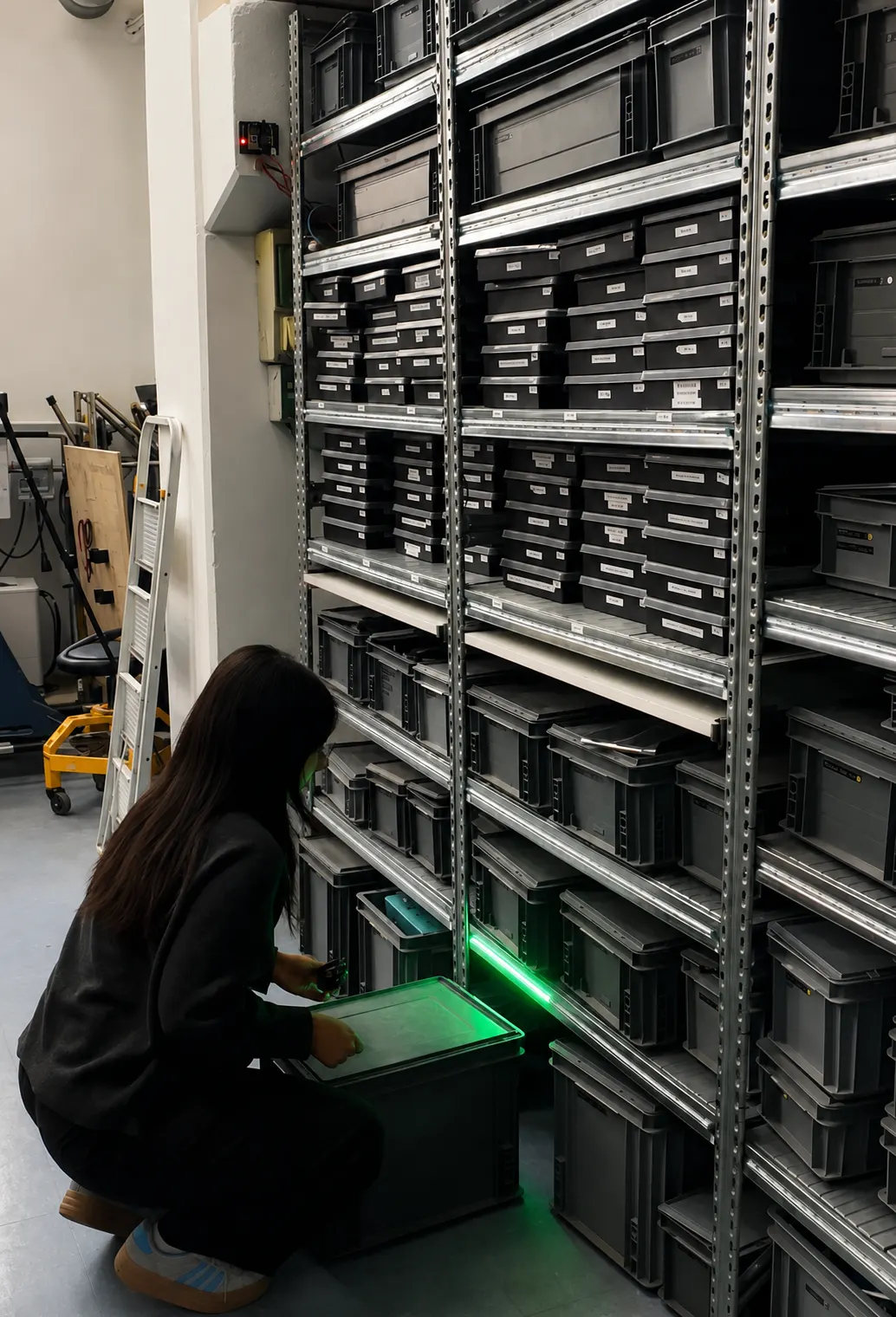
Knowing that a part is on a particular shelf helps, but you still have to search with your eyes. We connected every result to the LED strips installed along the shelves.
The flow became:
- A person asks for a part.
- The assistant interprets what they are looking for.
- It searches the inventory and obtains the location.
- It lights the corresponding area.
The answer no longer stopped at a screen. The workshop itself began to show you where to look.
We later tested a pointer to distinguish one drawer from the others in the same area. It did not change the main logic: it added another physical action based on the location already returned by the inventory.
We added an interface to keep the data useful
Finding a part solved only one part of the problem. We also needed to review locations and maintain the inventory when components were taken or moved.
The interface turned the system into more than a search tool. Inventory, queries, physical actions and management began sharing the same information. When a location changed, the lights did not need to be reprogrammed: the assistant used the updated data.
Voice made the assistant fit the space
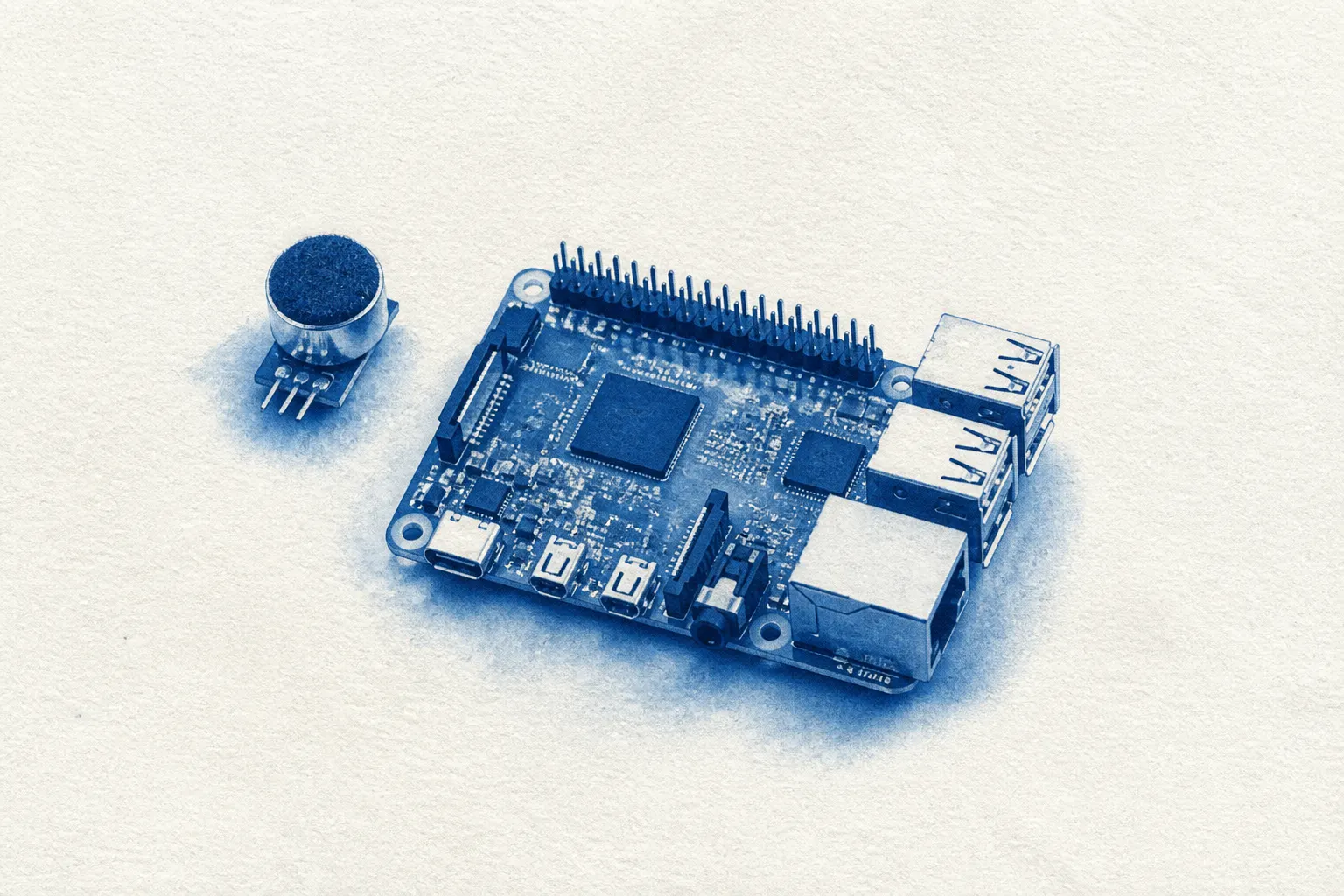
Using a phone or walking over to a computer every time you need a part is inconvenient when your hands are busy. The next step was adding a microphone and speaker to Raspberry Pi devices.
The interaction became a natural sequence:
You speak → the assistant understands → it searches the data → it replies → the workshop reacts.
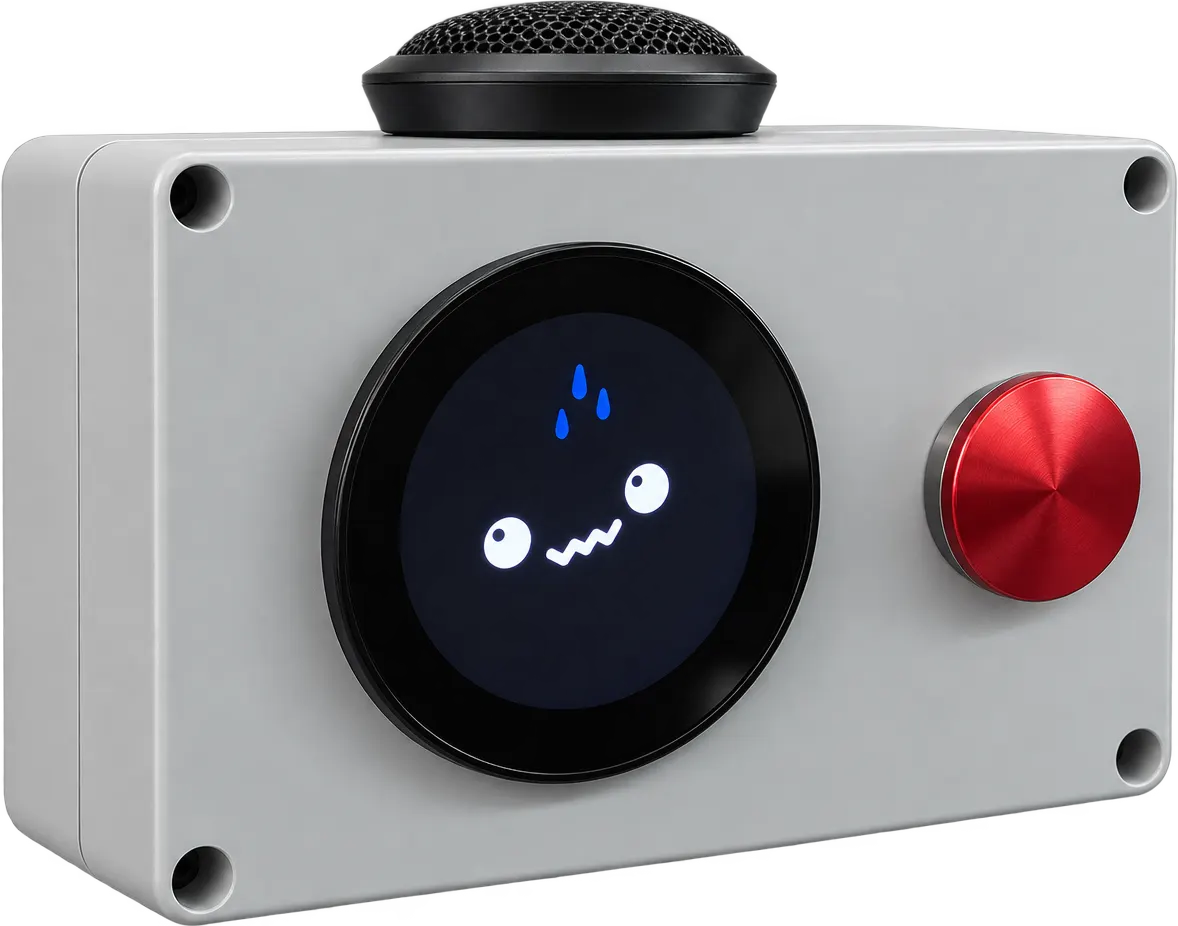
A circular screen displays the answer and gives the assistant an expression. The face was not necessary to locate a part, but it made it much clearer when the device was listening, searching or responding.
What happens underneath
Although the final experience feels like one conversation, the system connects several parts:
- a database that links every component to its location;
- an assistant that interprets the request;
- logic that decides which response and actions are appropriate;
- Raspberry Pi devices with microphones, speakers and screens;
- and LED strips that turn a digital result into a physical indication.
Vento keeps these parts inside the same connected system. That let us start with a text query and add one capability at a time instead of trying to design the final version on day one.
What building it in stages taught us
The useful part appeared long before the complete assistant. The first version already told us where things were. It then lit shelves, gained an interface, started listening and speaking and eventually developed a physical presence of its own.
That order reduced the risk of building an impressive experience on top of an inventory that did not work yet. Every step solved an observable problem and could be tested before adding the next one.
The same pattern can help in a laboratory, warehouse or another space where digital records correspond to physical objects: make the information reliable first, make it easy to query second, and only then connect the result to an action in the environment.
From an answer to a physical action
A chatbot can tell you that the M3 nuts are on shelf four. A connected assistant can give you the same answer and make shelf four light up.
That difference sums up the project. The AI is not an isolated conversation, but part of a system made of data, software and physical interfaces. We started by describing one small problem and built around what we learned in the workshop.